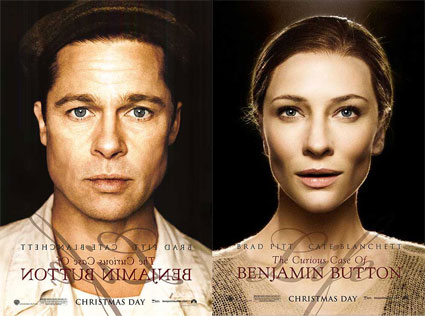
Just got back from watching The Curious Case of Benjamin Button.
I cried at the end.
I’ve never thought about death so much as then.
That, and the craft of film making is golden right now.

A scrapbook of thoughts on arts, culture and the Christian life.
Just got back from watching The Curious Case of Benjamin Button.
I cried at the end.
I’ve never thought about death so much as then.
That, and the craft of film making is golden right now.
Chesterton ends his Orthodoxy with a curious thought on Jesus and his personality as portrayed in the Bible. Others have touched upon this before. It warms me to think of it. Perhaps the scriptures could have used a little more of this (read on). I guess he knew what he was doing though.
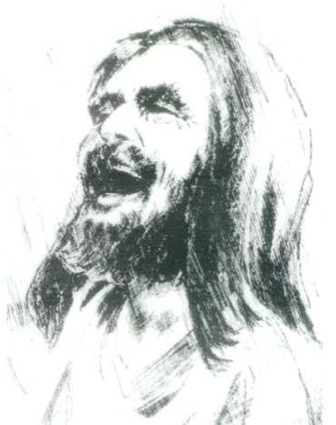
The tremendous figure which fills the Gospels [Jesus], towers above all the thinkers who ever thought themselves tall. His pathos was natural, almost casual. The Stoics, ancient and modern, were proud of concealing their tears. He never concealed His tears; He showed them plainly on His open face at any daily sight, such as the far sight of His native city. Yet He concealed something. Solemn supermen and imperial diplomatists are proud of restraining their anger. He never restrained His anger. He flung furniture down the front steps of the Temple, and asked men how they expected to escape the damnation of Hell. Yet He restrained something. I say it with reverence; there was in that shattering personality a thread that must be called shyness. There was something that He hid from all men when He went up on a mountain to pray. There was something that He covered constantly by abrupt silence or impetuous isolation. There was some one thing that was too great for God to show us when He walked upon the earth; and I have sometimes fancied that it was His mirth.
-G.K. Chesterton, Orthodoxy, Ch. 9 (last page)
Everyone is talking about Malcolm Gladwell’s new book Outliers, where, among other things, he declares that it takes 10,000 hours of practice to actually get really good at something. It turns out that “talent” is mostly just the talent to keep practicing when other people get sick of it. He also declares that being born in the right place and time actually ARE really important. Most rags-to-riches stories never happen because they start with, well, rags. The ones that do happen, it turns out they started out with rags + a heck of a lot, though not necessarily money.
In a blog post at Signal vs. Noise talking about cool stuff Gladwell says/does, this was mentioned:
In the interview, Gladwell also mentioned he meets with Nathan Myhrvold once a month to discuss ideas. Myhrvold sounds like quite a character: formerly Chief Technology Officer at Microsoft, began college at age 14, worked under Stephen Hawking studying cosmology, is a prize-winning nature and wildlife photographer whose work has appeared in scientific journals like Science and Nature, is a master French chef who works at one of Seattle’s leading French restaurants, and he won the world championship of barbecue. Talk about a renaissance man!
To which a commentor snapped back:
Wow, a little bitter about not being born into a situation where you can dink away your days taking exotic trips with your camera and throwing thousand dollar steaks on the barbie? Hey man, I am too!
I remember being similarly annoyed at reading the biography of Shinzi Suzuki who, despite being an orphan and losing everything in WWII, still managed to have enough cash and connections to tool around Europe for eight years studying with great musicians and having coffee with Albert Einstien every other day. And now he comes back to dispense his divine pedogogical knowledge to us from on high. Actualy, lots of his method is really useful. But like I said, his biography is…annoying.
So hey, I’m bitter right? Well, maybe a little less than I used to be though. Waste of time. Good for these guys, but so what? You’ve got to win with the hand you’re dealt. I think I’ll go do that. It’s not too shabby after all.
Again, a closer look at the historical context of the New Testament will usually reveal that Christianity was NOT a private religious movement. It was accused from the beginning of being in opposition to the secular rulers and world system (and it is!).
Philippi…[was made a full colony of Rome] – the highest privilege obtainable by a provincial municipality. Since their city had this status, Philippians could purchase property and were exempt from certain taxes. When he was in the city, Paul got a glimpse of the Philippians’ pride in their standing as a Roman colony. Paul and Silas exorcised a girl who was being used as a fortune-teller, and as a result her owners became enraged and brought Paul before the magistrates. Their charges are revealing: Paul and Silas, they said, were “throwing our city into confusion” by encouraging “customs (ethe) which it is not lawful for us to accept or to observe, being Romans” (Acts 17:1-9), the apostles were seen as subversives, both of the POLIS and the empire.
And further on:
Paul’s claim that Christians are citizens of a heavenly politeuma [greek – state/commonwealth of citizens] further indicates that the Philippian Christians are to consider themselves a colony of heaven more than as a colony of Rome. Paul imitated Christ by giving up his privileges as Hebrew of the Hebrews, and he exhorted the Philippians to follow his example by treating their Roman citizenship and attachment to the Roman emperor as “rubbish” for the sake of Christ and His heavenly politeuma.
In short: throughout Philippians, which some identify as one of the least political of Paul’s letters, Paul was treating the Church as an alternative to the politico-religious oranization of the city and of the empire.
-Peter Leithart, Against Christianity, Ch.1 Sec.11
Since this is a scrapbook of sorts, I don’t mind occasionally posting other’s posts/comments in their entirety. If I were to just keep them in my list of bookmarks or on Delicious, chances are I’d never actually see ’em again.
John Halton at the Boar’s Head Tavern posted this excellent insight into why so many Christians are so weird about the bible sometimes. In general this applies more to academic leaning or fundamentalist traditions, but could be any pocket of protestants.
I think the anxieties about “what does it really say?” stem partly from having narrowed the semantic range of the expression “the Word of God” to the point where it refers primarily, or even exclusively, to the printed word of the Bible. This means that the only way to “hear God speak” is through a correct interpretation of the Bible. And if you misinterpret the Bible, you won’t be hearing God speak.
That certainly used to be an anxiety of mine, and led to my despairing at times when hearing sermons that (it seemed to me) misinterpreted the text. God’s voice was being silenced by poor exegesis!
It seems to me that the cure for this is not to seek an authoritative, Magisterial interpretation of the Bible, but to widen our understanding of what “the Word of God” is. In particular, to remember that Jesus did not send his apostles out into the world to exegete the Bible, but to proclaim the forgiveness of sins in his name. To quote what I’ve previously described as the nearest thing I have to a life verse, Jesus’ own summary of what the Bible teaches:
“Thus it is written, that the Messiah is to suffer and to rise from the dead on the third day, and that repentance and forgiveness of sins is to be proclaimed in his name to all nations, beginning from Jerusalem.” (Luke 24:46-47)
The church’s proclamation of that message (in word and sacrament) is itself the Word of God to us. (It’s certainly what Luther had in mind when he said, of his own ministry, that “the Word did all”, as he simply sat and drank beer.) And as long as the church is clearly proclaiming that message, it’s not all that important if the preacher occasionally misconstrues a particular passage (though clearly it is better if preachers don’t do so – embracing the AND rather than the OR, and all that).
In a long section bashing the idea that:
Merton spends most of his time differentiating between the good (which he calls tradition) and the bad (convention) about old and established ways of living. The immediate context is liturgy, church structure and activity, but it can be applied to just about anything.
Tradition, which is always old, is at the same time ever new because it is always reviving – born again in each new generation, to be lived and applied in a new and particular way. Convention is simply the ossification of social customs. The activities of conventional people are merely excuses for not acting in a more integrally human way. Tradition nourishes the life of the spirit; convention merely disguises its interior decay.
-Thomas Merton, No Man is an Island, Ch.8 Sec.16
So has the world been gradually going to hell for 2000 years until Jesus comes back to fix everything (as the pre-mil dispensationalists claim), or is it gradually (sloooooooowwwly and sometimes invisibly) being redeemed and everything bought under the lordship of Christ, as the post-mil and some a-mil folks say? What did Lewis say?
It is like when you throw a stone into a pool, and the concentric waves spread out further and further. Who knows where it will end? Redeemed humanity is still young, it has hardly come to its full strength. But already there is joy enough in the little finger of a great saint to waken all the dead things of the universe into life.
-C.S. Lewis, The Great Divorce, p.106
Not wanting to stir up the usual debates over the Lord’s Supper, N.T. Wright keeps his comments short in his introductory apologetic. Nevertheless, they are very good. I have to say I feel robbed that nobody told me anything like this growing up. The Lord’s Supper was held in remarkably low regard. It meant almost nothing. Bummer.
Three opening remarks. First, we break bread and drink wine together, telling the story of Jesus and his death, because Jesus knew that this set of actions would explain the meaning of his death in a way that nothing else – no theories, no clever ideas – could ever do. After all, when Jesus died for our sins it wasn’t so he could fill our minds with true ideas, however important they may be, but so he could DO something, namely, rescue us from evil and death.
Second, it isn’t a piece of sympathetic magic, as suspicious Protestants have often worried it might be. This action, like the symbolic actions performed by the ancient prophets, becomes one of the points at which heaven and earth coincide. Paul says that “as often as you eat the bread and drink the cup, you proclaim the Lord’s death until he comes” (1 Corinthians 11:26). He doesn’t mean that it’s a good opportunity for a sermon. Like a handshake or a kiss, DOING it SAYS it.
Third, therefore, nor is the bread-breaking a mere occasion for remembering something that happened a long time ago, as suspicious Catholics sometimes suppose Protestants believe. When we break the bread and drink the wine, we find ourselves joining the disciples in the Upper Room. We are united with Jesus himself as the prays in Gethsemane and stands before Caiaphas and Pilate. We become one with him as he hangs on the cross and rises from the tomb. Past and present come together. Events from long ago are fused with the meal we are sharing here and now.
-N.T. Wright, Simply Christian, p. 153
Merton has this to say on hoping in God, not man:
We are saved by hope for that which we do not see and we wait for it with patience.
The holy spirit is the one who fills our heart with this hope and this patience. If we did not have him speaking constantly to the depths of our conscience, we could not go on believing in what the world has always held to be mad. The trials that seem to defy our hope and ruin the very foundations of all patience are meant, by the spirit of god, to make our hope more and more perfect, basing it entirely in god, removing every visible support that can be found in this world. For a hope that rests on temporal power or temporal happiness is not theological. It is merely human, and has no supernatural strength to give us.
-Thomas Merton, No Man is an Island, Ch.9 Sec.16
So for the coming year, 2009, put your hope in God. I’m sure your hope in Wall Street is already dashed, but put away whatever hope you still have in your savings and your job, if you still have one. Put away that hope in Obama. It can’t pan out. If you go to a really cool church, put away your hope in that or in the pastor. Put your hope in the only thing that has a well of supernatural strength. Your creator and redeemer.

G.K. Chesterton’s Orthodoxy is one of those books that is like a bag full of gemstones. At the same time, it leaves you wondering “where was the editor?” One paragraph will have you saying, “incredible!”, and the next, “um, huh? What does that have to do with the topic in this chapter… or with ANYTHING for that matter?” Anyway, I’ve been rereading this one as well. Again, last time I read it was before I was blogging and wrote anything down. I’m finding it difficult to reduce to posts. Some sections of it are superb, but would need to be quoted in several pages of context to really have much potency. Nevertheless, I will try with a few sections.
At the end of his essay on how rationalism drives men insane, he answers with a statement about what keeps men healthy:
Mysticism keeps men sane. As long as you have mystery you have health; when you destroy mystery you create morbidity. The ordinary man has always been sane because the ordinary man whas always been a mystic. He has permitted the twilight. He has always had one foot on earth and the other in fairyland. He has always left himself free to doubt his gods; but (unlike the agnostic of to-day) free also to believe in them. He has always cared more for truth than for consistency. If he saw two truths that seemed to contradict each other, he would take the two truths and the contradiction along with them. His spiritual sight is stereoscopic, like his phsyical sight: he sees two different pictures at once and yet sees all the better for that. Thus he has always believed that there was such a thing as fate, but such a thing as free will also.
The whole secret of mysticism is this: that man can understand everything by the help of what he does not understand. The morbid logician seeks to make everything lucid, and succeeds in making everything mysterious. The mystic allows one thing to be mysterious, and everything else becomes lucid. The determinist makes the theory of causation quite clear, and then finds that he cannot say “if you please” to the housemaid. The Christian permits free will to remain a sacred mystery; but because of this his relations with the housemaid become of a sparkling and crystal clearness.
-G.K. Chesterton, Orthodoxy, Ch.2