Skewing up online news

A few years ago, before I had a regular set of blogs to read every day, before I used a feed reader, I was a complete Digg junkie. Digg is a news site that lets users vote for what stories to promote to the front page or to bury. Now I haven’t used the site in years, largely because the quality and relevance of the stories that were promoted fell sharply as the site became popular. This recent commenter (“Samual Iglesias”) at Tech Crunch articulated remarkably well my own thoughts on the matter.

I think if anything hurts Digg, it’s the abundance of sensationalist headlines that simultaneously lead to spottily fact-checked and poorly written articles (suggesting that people don’t READ these things, just “digg” the sentiment expressed), and also alienate users of minority demographics with respect to the Digg community. A story that casts Bush in a positive light? A story that criticizes iPhone? A positive story about religion, or the (possibly detrimental) politicization of scientific communities? If Digg expands, it’s into its fixed demographic of h4×0rs and mostly left young male adults, and I’m not sure what conquering this self-informed, heavily participatory group will mean for the future of the internet. Is this revolutionary in the grand sense?


On Jeolousy

I’ve been thinking about jealousy quite a bit lately. Along those lines, here is one more piece by Billy Collins before I have to return the library book.

The Rival Poet

The column of your book titles,
always introducing your latest one,
looms over me like Roman architecture.

It is longer than the name of an Italian countess, longer
than this poem will probably be.

Etched on the head of a pin,
my own production would leave room for
The lord’s Prayer and many dancing angels.
No matter.

In my revenge dream I am the one
poised on the marble staircase
high above the crowded ballroom.
A retainer in livery announces me
and the Contessa Maria Teresa Isabella
Veronica Multalire Eleganza de Bella Ferrari.

You are the one below
fidgeting in your rented tux
with some local Cindy hanging all over you.

What people actually remembered about Jesus

I couldn’t pass up reposting this quote about Jesus:

But what had lasting significance were not the miracles themselves but Jesus’ love. Jesus raised his friend Lazarus from the dead, and a few years later, Lazarus died again. Jesus healed the sick, but eventually caught some other disease. He fed the ten thousands, and the next day they were hungry again. But we remember his love. It wasn’t that Jesus healed a leper but that he touched a leper, because no one touched lepers.

Shane Claiborne

For those of us really excited about miracles and also to those really excited about theology, maybe we ought to just touch the lepers.

Space Men and Women

OK. I’m being lazy this week with blogging. I’m just going to post one more Billy Collins poem. This one is called Man in Space.

All you have to do is listen to the way a man
sometimes talks to his wife at a table of people
and notice how intent he is on making his point
even though her lower lip is beginning to quiver,

and you will know why the women in science
fiction movies who inhabit a planet of their own
are not pictured making a salad or reading a magazine
when men from earth arrive in their rocket,

why they are always standing in a semicircle
with their arms folded, their bare legs set apart,
their breasts protected by hard metal disks.

I think this poem could be about a lot of different things, depending on how you approach it. It sure reminded me of one of those old cheesy Star Trek episodes.

A lot of the gals on that show had getups like this. Half of them using ended up kissing William Shatner and then later trying to mind-control him or something. One person I read commented about this photo:

“This is the episode with the giant can opener duel! Excelleeeeeent.”

Photo credit

Bust out your iambic pentameter

Some more Billy Collins for ya.

I must say this is about how deep ole William‘s goods sounded to me in elementary school.

This one is simply called Sonnet.

All we need is fourteen lines, well, thirteen now,
and after this one just a dozen
to launch a little ship on love’s storm-tossed seas,
then only ten more left like rows of beans.
How easily it goes unless you get Elizabethan
and insist the iambic bongos must be played
and rhymes positioned at the ends of lines,
one for every station of the cross.
But hang on here while we make the turn
into the final six where all will be resolved,
where longing and heartache will find an end,
where Laura will tell Petrarch to put down his pen,
take off those crazy medieval tights,
blow out the lights, and come at last to bed.

Working to earn God’s favor

I think we fallen men (this includes me of course) have the hardest time parting with the idea of works righteousness. I mean, a REALLY hard time. Even if we settle our understanding on a solid reformed doctrine of salvation (we are saved by grace alone), that STILL does not protect us from living in a manner where

  • good works = favor with God
  • sinning = back in the dog-house

That is NOT the gospel. Not of works lest any man should boast. It doesn’t stop after your first repentance. I’m not advocating sin here folks. I’m not saying God doesn’t answer prayer or doesn’t delight in good fruit in our lives or doesn’t reward hard work. I’m saying there IS no works righteousness. There can’t be. It’s a sham. Stop living like it’s real.

Travis Prinzi on the Boar’s Head Tavern illustrated this very well today with a quick rewrite of the parable of the prodigal son:

I’m going to get in trouble for this:

“The son said to him, ‘Father, I have sinned against heaven and against you. I am no longer worthy to be called your son.’

“But the father said to his servants, ‘Quick! Bring the best copy of the Scriptures and the prayer mat and send him into the chapel. I can’t hear him, and I refuse to pay attention to him, because he’s been sinning too much, and I’m not going to answer prayers of someone who has not been doing his duty.’ …

“Meanwhile, the older son was in the field. When he came near the house, he heard the sound of his brother turning the pages of the family Bible. So he called one of the servants and asked him what was going on. ’Your brother has come,’ he replied, ‘and your father has commanded him to go pray and study the Scriptures.’ And the older brother said, ‘Good. I’ve been saying for years that father shouldn’t listen to sinners until they start doing their duty like me.’”

That entire mentality is built on the idea that we are received back to God by grace, but after that, we need to start behaving like the older brother in order to get God to listen to us. We become better than the prodigal, and God begins listening to us and answering our prayers. Sorry. Every single time I come to the Father, I’m the prodigal.

Photo credit

Billy Collins Poetry

I’ve gotten in conversations with several people about poetry over the past year. The common theme is that, try as we might, we just don’t “get” most poetry. That is to say, we don’t like it. Perhaps it’s more boredom than the inability to put our fingers on what is actually wrong with it.

I’ve mentioned before that I’ve found some Yeats to be OK. Tennyson looked hopeful for a while, but I couldn’t get farther than the second chapter of Idylls of a King. What a snore. I have some Walt Whitman (still with dust) on my newly unpacked bookshelves. On second thought, I think it’s propping up the lamp on my desk upstairs.

One name that has come up a couple times in these conversations is Billy Collins. Supposedly this guy’s stuff is very accessible and actually quite good. Today at lunch, I had to pick-up my Rene Girard book at the library. It’s slow reading and even though I’m close to finished with it, I couldn’t renew it anymore. So I had to return it in the drive-up drop box and wait a day for it to be re-shelved, then grab it again. While I was there, I picked up Sailing Alone Around the Room, which is kind of a “best of” from Collin’s last four books along with a few new poems. I sampled several sections over lunch.

Wow. This is really good stuff! I don’t even know where to start. It’s super. I MUST post a few here over the next week or so. They are often simple, often quirky, sometimes deep, sometimes intentionally shallow. This one is called Another Reason Why I Don’t Keep a Gun in the House:

The neighbors’ dog will not stop barking.
He is barking the same high, rhythmic bark
that he barks every time they leave the house.
They must switch him on on their way out.

The neighbor’s dog will not stop barking.
I close all the windows in the house
and put on a Beethoven symphony full blast
but I can still hear him muffled under the music,
barking, barking, barking,

and now I can see him sitting in the orchestra,
his head raised confidently as if Beethoven
had included a part for barking dog.

When the record finally ends he is still barking,
sitting there in the oboe section barking,
his eyes fixed on the conductor who is entreating him with his baton

while the other musicians listen in respectful
silence to the famous barking dog solo,
that endless coda that first established
Beethoven as an innovative genius.

Converting long-term goals to short-term

More clear thinking from Seth Godin:


Do you have a plan?

A long or medium term plan for your brand or your blog or your career or your project?

You can have grand visions for remodeling your house or getting in shape, but if there’s a fire in the kitchen, you drop everything and put it out. What choice do you have? The problem, of course, is that most organizations are on fire, most of the time.

I gave a talk the other day, all about the unstoppable slow decline of interruption (traditional) media and the opportunities for rethinking how we communicate with people. At the end of the talk, someone came up and had very nice things to say about what he’d learned. The he leaned over and asked me to help him brainstorm about his brand’s upcoming ad campaign, because it was due to his boss on Friday.

Add up enough urgencies and you don’t get a fire, you get a career. A career putting out fires never leads to the goal you had in mind all along.

I guess the trick is to make the long term items even more urgent than today’s emergencies. Break them into steps and give them deadlines. Measure your people on what they did today in support of where you need to be next month.

If you work in an urgent-only culture, the only solution is to make the right things urgent.

I’m thinking about how we are approaching our moving houses and putting things away. Urgent things, one box at a time. I think it’s working well. That’s a medium-length goal of a few weeks though.

What I really want to figure out is how to apply this to taking my wife on a real honeymoon to Ireland someday, actually learning the music I really want to play on guitar, to teaching my kids how to read and play violin, to paying for their schooling, to saving up for stuff down the road. I have these long-term goals, but somehow I must convert them into a little something to do NOW to pull them off. Saving money toward something is one of the hardest to actually do, but at least it’s straight-forward. As for the other things, they needs some thought. And more immediate will.

Can’t go back now

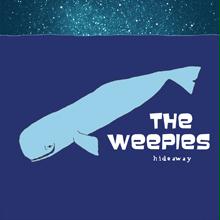
OK, so it’s been many years since I’ve followed pop radio, but last year I discovered The Weepies after hearing an interview on NPR. They are pop/folk duo with remarkable songwriting skills and melodies. Most of their songs and arrangements are very simple and straight-forward but oh-so-good. I mean, when is the last time you heard an album where every song was good? One after another!

Their latest album Hideaway (recorded in the their house) just came out and I was a sucker to get it. I’ve only listened through it a couple times and can’t say it is as good as their previous effort Say I Am You, but it looks to still have a lot of gems on it.

Here is the lyrics and a 30-sec clip from the opening track “Can’t Go Back Now”.

Listen

Yesterday, when you were young,
Everything you needed done was done for you.
Now you do it on your own
But you find you’re all alone,
What can you do?

You and me walk on
Cause you can’t go back now.

You know there will be days when you’re so tired that you can’t take another step,
The night will have no stars and you’ll think you’ve gone as far as you will ever get

But you and me walk on
Cause you can’t go back now

And yeah, yeah, go where you want to go
Be what you want to be,
If you ever turn around, you’ll see me.

I can’t really say why everybody wishes they were somewhere else
But in the end, the only steps that matter are the ones you take all by yourself

And you and me walk on
Yeah you and me walk on
Cause you can’t go back now
Walk on, walk on, walk on
You can’t go back now

I’d really love to, but…

A pertinent piece of wisdom from web designer Amy Hoy‘s blog:
(I’ve edited it a bit)

For the longest time, I used to tell people I couldn’t do something, sorry!, because I didn’t have enough time. Lately I’ve been trying to admit that I just don’t have the motivation or desire—maybe I just didn’t really want to do it in the first place.

These days I’d rather say, “I could have written a best-selling (fill in the blank) book but it turned out I’m just not a good personality match for writing 400 page books. I hated it and so I found ways to avoid working on it.” than “I didn’t have the time.” It feels more honest.

I personally feel that I’m letting go of a psychic burden every time I do it. One that frees me up, mentally, to do the things I really do care about.

It’s not that I “don’t have enough time”, it’s actually that “I just don’t care”. I doesn’t meant that your desire isn’t legitimate, that your idea isn’t good, or that your project isn’t something I’d like to see successful. I just care about a lot of stuff and I’m not motivated enough to care about your thing, that thing, too. At least not right now. I hope we can still be friends.