Intangible work – a few follow-up notes

“Bring examples of your work.” But we cannot.

Next, along these lines, I need to read more about the “service economy” as my friend Ryan G. was describing it this weekend. That seems to be a useful category for discussing much of this. If it can’t be escaped in our age (and it seems as if it cannot), then perhaps it can be transcended or sufficiently adjusted for. Actually, I believe there must be a way to sufficiently adjust for it and live a holistically healthy life. That is the whole purpose of my inquiry.

On a related note, it seems the only people remembered in history are those with concrete production – not performance, not vapor.

One of my music history professors from college is currently researching and writing a book about a certain Italian opera singer from the early 1800’s. She has had to dig though special archives to find scraps of program notes to track down details about her career and personal life. At the time, she was famous throughout the city and region as a magnificent (and sultry!) soprano. Now, you can quite literally count on one hand the number of people alive who even recognize her name (at least until the books is finished, then the number include a few other scholars).

In contrast, we have tons of knowledge about composers from this era who were relative nobodies. Why? They wrote their music down. Their creative output was tangible as ink on the page. You can give this sheet music to an orchestra today and bring it back to life. Those who wrote books are remembered. Those who didn’t, no matter how significant their creative output, are lost to history. I don’t mean to say that they didn’t have an impact. They may have influenced their children or students in ways that mattered tremendously down through many generations. But as soon as one generation has passed, the next one can’t put their finger on why or how a particular piece of knowledge or culture came into existence. Etchmiadzin Cathederal was built in the 4th century and it’s still here, but the wisdom of my great-grandfather Walter, who raised nine children and lived to be 102, is indiscernible.

This line of thought would lead one to believe that they must write books. I often feel that way. I think some have even felt compelled by God to write. Clearly, there is much potential value in this. Nevertheless, I think there is a great danger. It is part of our undue over-respect for those with this sort of output. We imagine their work to be more valuable in the eyes of God since their work is clearly more valuable (or at least visible) in the eyes on men. This can lead us to shun the humble man who does not create something “lasting” in this particular fashion. Abraham was one of the most significant and influential men in human history, but he didn’t write anything down or build any cities. We only know anything about him because one of his great-grandsons recorded some of the oral history. Saint Augustine’s mother Monica is the hero of Confessions and was later made a saint herself. Yet she didn’t do squat if you only measure worth in the eyes of men. She didn’t write or build anything either. She was “just” a faithful mother.

What I want to reach in my conception of the value of work is to be OK with never writing a book or changing the world, to be OK with my humble position, BUT to also still be willing and able to write that book and change the world. The Lord brings down those who think they have something to boast about, but lifts up the humble.

The trouble of intangible work

We live largely in a service economy, and increasingly in the more extreme information service economy. What exactly is it we do all day? I was going to try to write an essay on this, but it became quickly apparent that would be a lot of work. Perhaps some other time. Instead, I have some random thoughts that shall let take the air.

I was at an office meeting yesterday where an upcoming presentation was being discussed. We were all asked to “bring examples of our work”. The room got very quiet. “Um, like what?” Someone eventually blurted out. I was thinking the same thing. I know all these people. I know they are all intelligent and work hard all week long. But we can’t show anyone an example of our work. It’s almost completely intangible and the effort is spread out wide over many many things, such that you can’t point to anything specific and say, “I made that.” Most of the people in the room were web page editors, along with a few event promoters and programmers, like myself. To another person of their own discipline they could perhaps, given an hour or two, explain what they did. To the man on the street, they have nothing to show.

This passage comes to mind:

A man takes up desk work in an office, becomes a father himself, but has no work to share with his son and cannot explain to the son what he’s doing.

When the office work and the “information revolution” begin to dominate, the father-son bond disintegrates. If the father inhabits the house only for an hour or two in the evenings, then women’s values, marvelous as they are, will be the only values in the house.

When the son does not actually see what his father does during the day and through all seasons of the year, a hole will appear in the son’s psyche, and the hole will fill with demons who tell him that his father’s work is evil and that the father is evil.

-Robert Bly, Iron John, p.20 (edited)

My father was a veterinarian. As an animal doctor he worked with real flesh and blood every day. He performed surgeries on dogs and cats, treated whole fields worth of pregnant cows, and occasionally shot sick horses. Following him around on his calls as a child of about eight years old, I could very plainly see the raw interaction with the world and tangible result of his work. When a horse could walk again properly or an animal gave birth, there was no question. After ten years of that, he moved to take over the family farm from my grandfather. As a farmer it was all tangible too. You work with your hands repairing the combine all day. Finally, it roars to life and you take it into the field in a flurry of dust and noise. Twenty minutes later, it returns and fills up a truck with white clean wheat – enough to easily bake bread for the entire town for a year.

His father before him did the same thing. My great-grandfather lived on the same land, though he raised chickens for laying. Thousands of them. He built 22 large chicken houses across the hillside. They were all painted red. They are all still there today.

I’ve been a full-time computer programmer for about six years now and was part-time for much longer. I know how to make the computers do just about anything I want as long as I have all my tools handy. I’ve worked up through the ranks to be the most senior developer in the company. (All the people above me are in some form of management.) But what do I actually have to show for any of it? Precious little. Every couple of years the wheel is reinvented, data is imported, and life goes on for all the people that use the data to do equally intangible tasks.

I believe that I can teach my son how to work. I can teach him to work hard and take joy in his craft. I believe I can teach him not to be lazy. But I am not sure how to teach him the connection between his labor every day and all the things around him – its connection to God and the created order, to his wife, to his children, to his neighbor, to every other little thing he does. We, as a culture, have compartmentalized these things to ridiculous levels. I’m not just trying to figure out how to teach these things to my kids, but how to understand them myself, while I am in the thick of it.

I think it’s time to shift gears.

A couple of years ago, I attended a programming conference in Portland for the (at the time) new Ruby programming language. In attendance (though I didn’t have the chance to meet him personally) was a very unusual character known only by his handle “Why the Lucky Stiff”, or just “Why” for short. Now this guy was one of the most quirky and clever programmers around. He was a prolific contributor to the open-source community and had written some brilliantly innovative web application development tools. His code was also filled with inside jokes and frequently accompanied by confusing cartoons. Actually, I never quite understood what made the guy tick, but his creative output in my field was incredible. A couple of years ago though, he abruptly dropped off the map, closed down his blog and his twitter account, and disappeared completely. Some comments he posted a few days before this happened perhaps shed light on his reasons:

“Programming is rather thankless. You see your works become replaced by superior works in a year, unable to run at all in a few more.”

He’s right. Such is the nature of this sort of technology. The farmer with draft horses slowly saw his work replaced by engines, but it took a generation or two. Programmers can see their work replaced literally in months. I tried to write an iPhone application a few weeks ago and discovered that large pieces of code from an example book published only nine months ago failed to compile anymore. Last summer, I wrote a new credit card processing website for my organization to replace one that was about five years old. I just heard in a meeting yesterday that later this fall I will be rewriting the whole thing again, with another face-lift and some slightly different technology on the back-end. “Why” makes another humorous and true comment in the same vein:

“If you program and want any longevity to your work, make a game. All else recycles, but people rewrite architectures to keep games alive.”

Too true! One of my favorite games while growing up in the early nineties was The Shadow of Yserbius, an old-school dungeon crawl that connected over the modem to a long-defunct dial-up gaming network run by the Sierra company. I treasured the 10 hours a month of long-distance calling time I was allowed to use to play it after hours. Web browsers didn’t exist at the time. Nobody had heard of the internet. You can still play this game today! Hobby programmers have torn apart the insides and reworked it to run across modern day networks on your Mac or PC using an DOS emulator and imitating the original protocol of the old dial-up servers.

Frederick Brooks, in The Mythical Man Month, writes:

“The last woe, and sometimes the last straw, [in the craft of programming], is that the product over which one has labored so long appears to be obsolete upon (or before) completion. Already the displacement of one’s thought-child is not only conceived, but scheduled.”

In other news, the 100 or so hours of time I put into the payment processing application last year are soon to be replaced. The one the last guy wrote is long forgotten. Now I got paid well for every hour of that and the money was put to good use. I am very glad I have a job. This is not a gripe about work in general (which I think is almost always a sin) but an internal conversation about the difficulties of intangible work. I could have used those 100 hours to learn to play “The Cathedral” by Augustine Barrios, then perform it for next 40 years. I could have spent 100 hours building LEGOs with my kids or reading to my wife. Perhaps I should have written a game! (I have a fun escape-from-robots-in-a-labyrinth one sketched out in my notebook.) Still, those are all fairly intangible things. Nothing near as solid as the farmer conjuring up a truckload of apples from the dirt or a carpenter building a house in what used to be an empty field.

Many philosophers and psychologists and noted that the disconnection of a man’s work with the production as a whole is unhealthy on many levels. Before perhaps, a blacksmith would create much of a machine from scratch. Now, an assembly-line worker welds the same two pieces together, all day long, all year long. This change happened during the industrial revolution. I think the humanitarian problem has been compacted in the digital age. Now, the two things we are welding together cannot even be held in our hands. Advocates of progress would say this is all fine and dandy. Production is through the roof! Just look at how cool this iPhone is! Yes, but at what cost? It is the wholeness of man, the connection to his body, family, his history, his ancestors, and the land. I think it would be beneficial for more theologians to follow this train of thought as well. The more you isolate your discipline, the more likely you are to fall into this trap.

I don’t know how many times I’ve heard the illustration of the three men digging in the field. One says he’s getting a paycheck, the second says he’s digging a hole, the third says he is building a cathedral. The goal of the illustration is to help cogs in the machine become more motivated by helping them see how wonderful the big picture is. I just heard this illustration again in fact a couple weeks ago at a human resources meeting. It’s a good one, but I think it gets repeated so often because we are continually NOT seeing how our intangible work fits into our life and culture. Mental gymnastics alone won’t heal this division.


Parody the best criticism

What is sharper than parody? Done well, it is not shrill, but gives your enemy the respect he deserves before smashing him to bits.

Shakespeare mocked the French to no end in Henry V (which I read out loud with some friends this past weekend). But he learned French to do it.

Think angsty music videos are ridiculous? You can complain about them or preach a sermon against MTV. Or, you can take the time to craft your own and show how ridiculous they really are.

I found this to be completely hilarious, (except for the last part where it takes a pointless and vulgar turn – fortunately this embed code lets to specify the timeframe when embedding video – rockin’!).

If what you are against is worth really being against, then it is worth learning it from the inside out. If something is worth criticism, then the best thing you could do is to parody it well.

If you can’t, then either:

  • A) You haven’t done your homework and your criticism is probably weak
  • B) The thing actually ISN’T worth criticizing. Either you are in the wrong, or it’s not important. Chill out.

Healing complicates, not simplifies

Here, Wendell Berry makes a very interesting observation about the nature of problems and solutions in general, or more specifically, about cultural disease and healing.

These things that appear to be distinct are nevertheless caught in a network of mutual dependence and influence that is the substantiation of their unity. Body, soul (or mind or spirit), community, and world are all susceptible to each other’s influence, and they are all conductors of each other’s influence. The body is damaged by the bewilderment of the spirit, and it conducts the influence of that bewilderment into the earth, and the earth conducts it into the community and so on.

-Wendell Berry, The Unsettling of America, p.110

He is talking about how all the parts of our world and community are connected and that a problem in one section will never be isolated. It will always have far reaching effects. For example, if more families are torn apart by divorce, all kinds of other bad things follow: damaged children obviously, but also interrupted employment, litigation, etc. When a school goes downhill, it has far-reaching effects on it’s students. When a farmer abuses the soil for short-term gain, it can impair the next generation significantly. When a man visit’s a prostitute, he spreads disease, furthers the abuse of women, financially props up the pimp, etc. When a man smokes weed, his twenty dollars trickle all the way back to gangs on the Mexican border who like to leave severed heads lying around. He also hurts his employer by being spacey. He hurts his neighbor by caring less about him too, at least for a while.

Now, none of this is news. You’ve probably all heard the illustration about how a drop of water in a pond can send ripples out all the way to the edges.

All that is certain is that an error introduced anywhere in the network ramifies beyond the scope of prediction; consequences occur all over the place, and each consequence breeds further consequences. But it seems unlikely that an error can ramify endlessly. It spreads by way of the connections in the network, but sooner or later it must also begin to break them. We are talking, obviously, about a circulatory system, a disease of a circulatory system tends first to impair circulation and then to stop it altogether.

Berry also notes that, because an error in a network (I’m going to substitute “selfishness in the community” for “error”) is, by nature, destructive, it tends to break ties as it goes. The horrors of divorce cannot spread to a thousand generations since those generations aren’t going to exist. The decadence of Rome before it’s fall didn’t spread to the whole world. After enough of the empire was broken, it imploded and was overcome in war. Because evil burns its bridges, it can only travel so far. A comforting though actually!

Now here is what I found the most curious:

Healing, on the other hand, complicates the system by opening and restoring connections among the various parts – in this way restoring the ultimate simplicity of their union. When all the parts of the body are working together, are under each other’s influence, we say that it is whole; it is healthy. The same is true of the world, of which our bodies are parts. The parts are healthy insofar as they are joined harmoniously to the whole.

Healing, by it’s very nature, makes the network more complicated. When you restore connections in the family, then you have to learn to live with these people. If you and your wife get back together, then you have to learn to relate to her mother-in-law again. And you have to feed to dog, which you didn’t have to do before. A lot of people talk of ways to fix education. But do you realize that if you fix education, it will not make it suddenly simple and elegant? If the interaction of teachers, students, parents, and the rest of the technology is made richer and more healthy, it will also be increasingly difficult to put your finger on one thing that is holding it together.

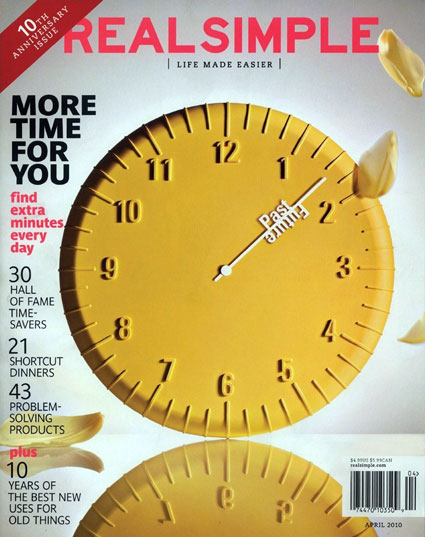
We often, very often, imagine that healing will simplify things. The newsstand is full of magazines offering ideas to simplify your life. They even have titles like “Real Simple”. Religious fundamentalists also tend to think like this. Introduce this one big change, like everyone taking the bible literally or everyone submitting to Sharia law, or everyone tossing away their “crutch” of faith in a fit of secular humanist existential ecstasy, THEN the world will be less tangled up. It will be simple! No. Our world, our community is a circulatory system. The more healthy it is, the more tightly integrated it will be – the more difficult it will be to understand. Yes, in some ways, when life is healed it is simpler. But it is also thicker.

Hate causes a mess, but love causes even more of mess!

Wendell Berry’s Cures for America (from 1977)

After using Wendell Berry as my example earlier of being “long on diagnosis, short on cure”, I was delighted find him admit this straight-up on the one of the last pages of The Unsettling of America.

And so we come to the question of what, in a public or governmental sense, ought to be done. Any criticism of an established way, if it is to be valid, must have as its standard not only a need, but a better way. it must show that a better way is desirable, and it must give examples to show that it is possible.

This should be obvious, right? Practical examples? But as I mentioned in earlier posts, there is a great dearth of them.

This was followed by two pages of self-admittedly brief and vague solutions. They did include numbered bullet points though! What more could you ask for? I’ll try to summarize them here with a few comments. Remember, this was published in 1977.

1. “Withdrawal of confidence from the league of specialists, officials, and corporation executives who for at least a generation have had almost exclusive charge of the problem and who have enormously enriched and empowered themselves by making it worse.” Wow. And he is talking about the department of agriculture and the food industry here, but he could be talking about anybody. Wall Street? The housing bubble? City planners? The military overseas. You name it, this could be point #1 on just about anybody’s list. Stop trusting the people in charge. This isn’t a call to rebel against them, but to simply no longer believe what they say without thinking about it first. Very good advice.

2. Using some of his philosophical language about “energy” he ask us to learn self-restraint in our consumption, and to learn to enjoy working hard.

3. Return to the U.S. founder’s philosophy about government protecting the small and weak from the great and powerful through negative law. That is, by stopping bad stuff from happening, not by throwing lots of money at allegedly “good” stuff.

4. Make very low-interest loans available to those wishing to become small farmers and buy small pieces of farm land.

5. Price controls to protect farmers and prevent waste. (Yikes!)

6. Promote fresh local food to reduce dependence on distant imports.

7. Make every town and city operate an organic waste depot for converting sewage, garbage, etc. to fertilizer to be used on local farms. This will break our expensive and dangerous dependence on mined fossil fertilizers.

8. Reform sanitation laws and get rid of the ones that are killing small farmers and ranchers by making it too hard and expensive to meet FDA standards.

9.1 Encourage technological and genetic diversity for conserving soil.

9.2 Forbid state-funded university professors from simply being the R&D departments of private corporations, yielding no public benefit.

10. Force agriculture professors to spend 50% of their time operating a small farm. Half their salary must from practical experience.

11. Some more philosophy. This time advocating a more moral and humble anthropology. Self-restraint.

12. “Having exploited “relativism” until, as a people, we have no deeply believed reasons for doing anything, we must now ask ourselves if there is not, after all, an absolute good by which we must measure ourselves and for which we must work.” He goes on. The final point is a condemnation of relativism and thinly veiled support for, essentially, theism.

This is an interesting mix of solutions! Some of them are very conservative, pushing for less government involvement. Others are just the opposite (price controls and farm loans) which call for more legislation and enforcement. (By the way, I think history makes a strong case that price controls almost always backfire). The bulk of the points are moral though and for moral arguments to work, you need his last point, which is theism. Berry is a fervent Christian, though he seems to be going out of his way not to mention it in this work so as not to alienate his secular audience. Nevertheless, he can’t help quoting the Bible about every third page. What I see this meaning is that, more than anything else, the church needs to be aware of these issues. We have denounced consumerism from time to time, but we are so caught up in it, we are usually unable to denounce it near enough. Instead we have the prosperity gospel. Even in most orthodox American churches, how many in the congregation are chained to high mortgages and credit card debt? A heck of a lot. It’s part of the same root trouble that has also led to the exploitation of the land that Berry draws attention to in this book.

I need to track down some follow-up material from Berry to see what he thinks of the situation now in 2011. For example, in one chapter he advocates organic food and local farming. That dimension has exploded since he wrote this in the late seventies. As far as I can tell, soil conservation practices, such as crop rotation, are in a healthier state than three decades ago too. Other sides of the coin are quite a bit worse though. I would guess that he continues to be dismayed at his conservative Christian colleague’s allergic reactions to environmentalism. On the other hand, I can imagine him being equally frustrated with environmentalists who do not fear God and dream of left-wing fascism.

Ultimately, I enjoyed Berry’s book, despite the doom and gloom, especially the material related to work/life balance, generalist work, vocation, and fatherhood.

Fresh pineapple

I don’t wish to teach my son
to work,
but rather to work, love, pray, and rest.
To sow and to reap,
to know grace,
when he sows the wind.
Instead of reaping the whirlwind,
fresh pineapple in December.

* Pineapple is such a wild, spiky and delicious fruit. How is it that I can have one on my table in the middle of winter? Some would say it is due to the triumph of coordinated global agriculture, high-speed international shipping and government trade agreements. But the pineapple isn’t normal. It will have none of that. It knows it’s there because of grace.

Photo credit

Is the wilderness a consumer good?

I wrote this while camping in the woods after reading Wendell Berry distinguishing between nature-lovers treating the outdoors as a “scenic” commodity versus the farmer (and anyone who eats food) being tied to it with much stronger bonds.

Is the wilderness a consumer good? Some folks want to live out here, but what are they going to do for a living? Write novels? Take photographs? Telecommute back to Oracle? Perhaps that is just affluence treating the forest like a slave. Like a strip-club patron throwing a twenty at the stage and shouting, “Dance!” We flex our purchasing power in order to buy a home on the edge of civilization. Oh, how natural of us. The forest doesn’t ask much of us though. It bides it’s time, occasionally bursting into flames on its own accord to brush off the brush and clear out campers.

Who exactly did Jesus forgive while he hung on the cross?

“Father, forgive them, for they know not what they do.” (Luke 23:34)

Who is “them”? The gentile Roman soldiers who were just following orders? I guess it’s easy to make an excuse for them. They’ll hear the gospel later.

Was he forgiving the mob then? The mob caught up in volent mimetic contagion (as Girard would put it)? They really didn’t know what they were doing either. They were out of control, imitating the thrower of the first stone. We’ll give them a pass too.

Was he forgiving the religious leaders and murderous plotters as well? The guy who really DID throw the first stone? Better to have a millstone tied around one’s neck and thrown into the sea than to cause the mob to sin. (Luke 17:2) Is he forgiving the model too? The arch-hater of God? If THAT guy was included in Jesus’ intercession with the Father while he hung on the cross, then who on earth does that leave out?

I’m not trying to advocate including them or leaving them out. I’m just asking, how hard are we going to work to make sure that someone gets excluded from God’s statement here?

Earlier, he told the same plotters, to their face, “You are of your father, the devil!” (John 8:44) But that’s the point, right? That’s why He was there, to reconcile even these sons of Satan.

By the way, this is good news for those of us who are sons of Satan. I think the good news stands. It is not just for the ears of the righteous, or (as Luke 23:34 implies) for the ignorant, but also for the rebellious.

On theological liberalism

Theological liberalism has no gonads. It is impotent. Ah, but it has seemed so influential! It’s taken over much of the western church. Has it not? No. The perceived influence of theological liberalism is only the encroaching dominion of unbelief – unbelief that grows like strep in a warm petri dish when the burning coals and solid ice of orthodoxy are nowhere to be found.

When an Episcopal Priest can stand up on Easter morning and declare to the congregation that Jesus did not actually, historically, bodily, rise from the dead (happened this year at a church in Nashville) – that is not the triumph of liberty, non-violence, and the love of Christ. It is the triumph dance of the enemy, declaring as shrilly as he can that God is dead. Perhaps if he shouts it a little louder, it will drown out the hum of the approaching eschaton.

Satan worked in the hearts of men to move the mob to murder Christ. Now, he must work to keep him murdered. The mob must have won. They must have killed him so well that He really stayed in the ground, despite whatever his crazy followers said afterwards. But they can talk all they want. God is liberated from the grave.

Some thoughts on IT management and higher ed

Listening to the spiels of several candidates for the top IT manager in my organization gave me time to scribble down some thoughts on the matter.

I found things I liked about each candidate but also some ideas I disagreed with.

Customer focus is absolutely necessary to maintain energy inside a service group. Introspection and nerdy-focus will implode it. Focusing on the technology makes life mechanized, meaningless, and dehumanized. Server uptime as a metric apart from the context of real people doing real creative work is meaningless. Not just meaningless, but destructive when you imagine it to exist in a vacuum.

Fun alliterative phrases heard:

“critical core competencies”

“support of service assements”

From what I can gather, the “Educause” conference must be a real snore.

Someone said, “Leadership is not just the responsibility of the president…”. Well, yes, in many ways it’s up to him least of all because he is too distant to affect real change. People close to you, people you love, these people can lead. Other, distant people can be safely imitated (for better or worse), but that is only an imagined leadership. Real people, close to you, on the ground need to lead.

Someone else said, “I believe in the value of advanced degrees, after all, it’s the business we are in.” After being in this business for 11 years, I can now say that I actually do not believe in the value of advanced degrees, in general. Often, not all the time, but very often, we are in the “business” of convincing young people to max out their credit cards for a gallon of snake-oil. And it’s not that we are shysters – we want so badly to believe in the value of education and degrees, just like the students do. They are pinning all their hopes and dreams on them and we don’t want them to fail. But the higher-ed bubble of the last 30 years has taken, is taking, it’s toll on many lives right now. With my own children, when they are older, depending on their interest, I will likely advocate some sort of apprenticeship instead. It’s not institutionalized, but has the potential to be far more valuable.

Imagining myself in in the position of these candidates presents a challenging thought experiment. It’s a complicated job with a lot of moving targets. The best way forward does not seem obvious to me at this point, though I have a pretty good idea what I would try to focus on and what I would not.

I’m reading Frederick Brook’s The Mythical Man Month right now. Very good stuff in here, and the clear thinking and writing is dry but exemplary.