Kegan qualifications?

Saw this headline today:

Elena Kagan set record for fundraising at Harvard Law

Wow. That’s cited as a notable qualification for being a Supreme Court Justice? I guess if you’ve never served as a judge before you have to mention something. It doesn’t matter whether you like her or not or whether she’s on your team or not, the only thing you can say in this case is “follow the money”.

Pardon my skepticism, but money and justice do not a soluble solution make.

Belloc trashes rich folks pretending to be hippies or outdoorsmen

This was written nearly 100 years ago, but it sounds like something out of Stuff White People Like.

I say it roundly; if it were not for the punctiliousness of the middle-class in these matters all our civilization would go to pieces. They are the conservators and the maintainers of the standard, the moderators of Europe, the salt of society. For the kind of man who boasts that he does not mind dirty clothes or roughing it, is either a man who cares nothing for all that civilization has built up and who rather hates it, or else (and this is much more common) he is a rich man, or accustomed to live among the rich, and can afford to waste energy and stuff because he feels in a vague way that more clothes can always be bought, that at the end of his vagabondism he can get excellent dinners, and that London and Paris are full of luxurious baths and barber shops. Of all the corrupting effects of wealth there is none worse than this, that it makes the wealthy (and their parasites) think in some way divine, or at least a lovely character of the mind, what is in truth nothing but their power of luxurious living. Heaven keep us all from great riches–I mean from very great riches.

-The Path to Rome, Hilaire Belloc, p.72

Mere Churchianity notes

Just a word about Michael’s book. I had anticipated it through the past year and read it in just a couple days when it finally arrived.

I had expected to post a bunch about it here, but alas, I find I have nothing to say that hasn’t been said 100 times better himself.

Unfortunately, the book really didn’t do anything for me since I’ve been reading all his other stuff for the past (is it four?) years.

I would quickly recommend the book to a newcomer as a great quick introduction to some of his thoughts.

All the best stuff though, where he goes into (the most useful) depth of all the topics he brings up in the book are contained in somewhat disorganized essays written on his blog over the past decade.

To someone looking for some heavier material right away, I would point them to a few specifics.

A comment on what some other folks are saying: Michael was not as anti-institutional church as he appears to be in the book. The many nuances of his position on that appear to have been lost in editing.

Still, it’s a good book. I bought a couple copies and plan to pass ’em around. Even if you don’t agree with his conclusions, it’s a healthy reality check for contemporary American church culture.

He’s constantly bringing it back around to Jesus and we can always use some more of that, from every angle.

The fall of the god of reason

It is because we have wanted to distance ourselves from religion that it is now returning with such force and in a retrograde, violent form. Rationalism was thus not real distancing, but a dike that is in the process of giving way. In this, it will perhaps have been our last mythology. We “believed” in reason, as people used to believe in the gods.

-Rene Girard, Battling to the End, p.119

The neccissity of the imitation of Christ

The Old Testament law reveals to us something about the nature of God, but it is also an impossibility for us. Christ is our mediator in both directions. He stands not just between our sin and God, but he is also the only way we know God first hand. He only did what he saw the father doing. Only by imitating Christ can we imitate God and grow to be more like him.

Christianity invites us to imitate a God who is perfectly good. It teaches us that if we do not do so, we will expose ourselves to the worst. There is no solution to mimetism aside from a good model. Yet the Greeks never suggested we imitate the gods. They always say that Dionysus should be kept at a distance and that one should never go close to him. Chris alone is approachable from this point of view. The Greeks had no model of transcendence to imitate. That was their problem, and it is THE problem of archaic religions. However, in a world where the founding murder has disappeared, we have no choice but to imitate Christ, imitate him to the letter, do everything he says to do. The Passion reveals both mimetism and the only way to remedy it.

-Rene Girard, Battling to the End, p.101

Paul’s conversion

Paul’s conversion is often explained (rightly so) not of a bad man suddenly becoming good, but of an already very good and passionate religious man, a “Pharisee of Pharisees”, whose trajectory was tweaked by his meeting with the risen Jesus Christ.

From the standpoint of violence though (what Girard cares about), Paul’s conversion needs to be described a bit differently.

Reality is not rational, but religious. This is what the Gospels tell us. This is at the heart of history’s contradictions, in the interactions that people weave with one another, in their relations, which are always threatened by reciprocity. This awareness is needed more than ever now that institutions no longer help us and we each have to make the transformation by ourselves. In this, we have returned to Paul’s conversation, to the voice asking, “why do you persecute me?” Paul’s radicalism is a very appropriate for our time. He was less the hero who “rose” to holiness than the persecutor who turned himself back and falls to the ground.

-Rene Girard, Battling to the End, p.112

Confusing man, nature, and God

Mimetism is contagious and will attack nature itself. We are thus in the process of seeing that, far from making them obsolete forever, the confusion between nature and culture in the apocalyptic texts, which used to be seen as naive, is becoming unexpectedly relevant, with the ultramodern theme of the contamination of nature by human hands.

-Rene Girard, Battling to the End, p.114

Girard develops this idea more in other places (not in this book). I have heard others (can’t remember who) mention it as well. It describes an interesting phenomenon: The increasing confusion over what is caused by nature and what is caused by humans. The bulk of environmentalism in the past ten years has taken on a very religious tone.

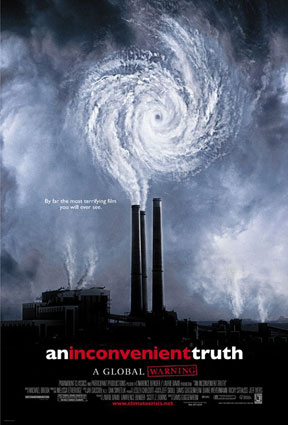
It’s because of this we can have a natural weather phenomenon like a hurricane simultaneously declared to be a direct judgmental action by God (against gays, abortionists, America, etc.) AND also something entirely the fault of humans. (The hurricane isn’t god’s doing, it’s OURS!) This is part of the global warming mythology. See the poster for Al Gore’s movie a few years ago for an illustration.

Girard sees this as a natural part of the escalation to extremes: confusing the work of nature, God, and man.

Girard’s criticism of Islam

From the epilogue of Battling to the End:

The Crusades are not as important as Islam thinks. The Crusades were an archaic regression without consequences for the essence of Christianity. Christ died everywhere and for everyone. Seeing Jews and Christians as falsifies is the most irremediable thing. It allows Muslims to eliminate all serious discussion, any comparison among the three religions. It amounts to not wanting to see what is at stake in the prophetic tradition.

Why has Christian revelation been subject to the most hostile and ferocious possible criticism for centuries, but not Islam? There is an abdication of reason here. In some respects, it resembles the aporia of pacifism, which as we have seen can be a strong encouragement for aggression. The Koran would thus benefit from being studied in the same way the Jewish and Christian texts have been studied. I think that a comparative approach would reveal that it contains no real awareness of collective murder.

Christians understand that the Passion has rendered collective murder inoperative. This is why, far from reducing violence, the Passion aggravates it. Islamism seems to have understood this very quickly, but in the sense of jihad.

-Rene Girard, Battling to the End, p.216

This is how Jesus “does not come to bring peace, but a sword”. Our usual way of gaining peace all by ourselves, (war!), will be increasingly ineffective. Islam has been aggravated more by this more than the rest of the world even.

Old-school war is dead

The Cold War completely changed the balance of power and we were gradually led into increasingly asymmetrical conflicts and “surgical” wars, which are the mimetic doubles of the terrorist carnage we experience today. It seems that military culture is dead in the West, through not in the East. Not how the elimination of compulsory military service has gone unnoticed among us.

-Rene Girard, Battling to the End, p.91

Whoa. Thousands of years of history and suddenly, what happened to the draft? Poof. Times really are pretty different.

Can barely be satirized

For a fleeting moment here, Girard goes all David Bently-Hart on the new atheists and lays the smack down.

Today’s anti-religion combines so much error and nonsense about religion that it can barely be satirized. It serves the cause that it would undermine, and secretly defends the mistakes that it believes it is correcting; it frightens religion without managing to control it. By seeking to demystify sacrifice, current demystification does a much worse job than the Christianity that it thinks it is attacking because it still confuses Christianity with archaic religion.

-Rene Girard, Battling to the End, p.198